1. The Middle East has been the principal battlefield of a new stage in the global imperialist confrontation. Facing its long-term decline as the top capitalist power, the United States seeks to reverse the changing balance of forces through military escalation, regional wars, and the reorganization of strategic geopolitical spaces against the rise of China. The destruction of existing states, the installation of collaborationist regimes, the control of energy resources and trade corridors, and the elimination of every force capable of resisting US-Israel domination constitute different components of a single strategic project.
2. Beginning with the invasions and regime-change operations in Afghanistan and Iraq and continuing through Libya, Syria, and now Iran, this strategy has systematically sought to dismantle states that stand in contradiction to imperialist domination and replace them with collaborationist regimes serving the Western imperialist interests. This process has never relied solely on military intervention. Alongside military aggression, imperialism has waged a sustained ideological offensive by fostering sectarianism, ethnic divisions, and imperialist-backed jihadist forces. In doing so, it has weakened the common struggle of workers and oppressed peoples around the world, creating favorable conditions both for imperialist intervention and for the consolidation of reactionary bourgeois rule.
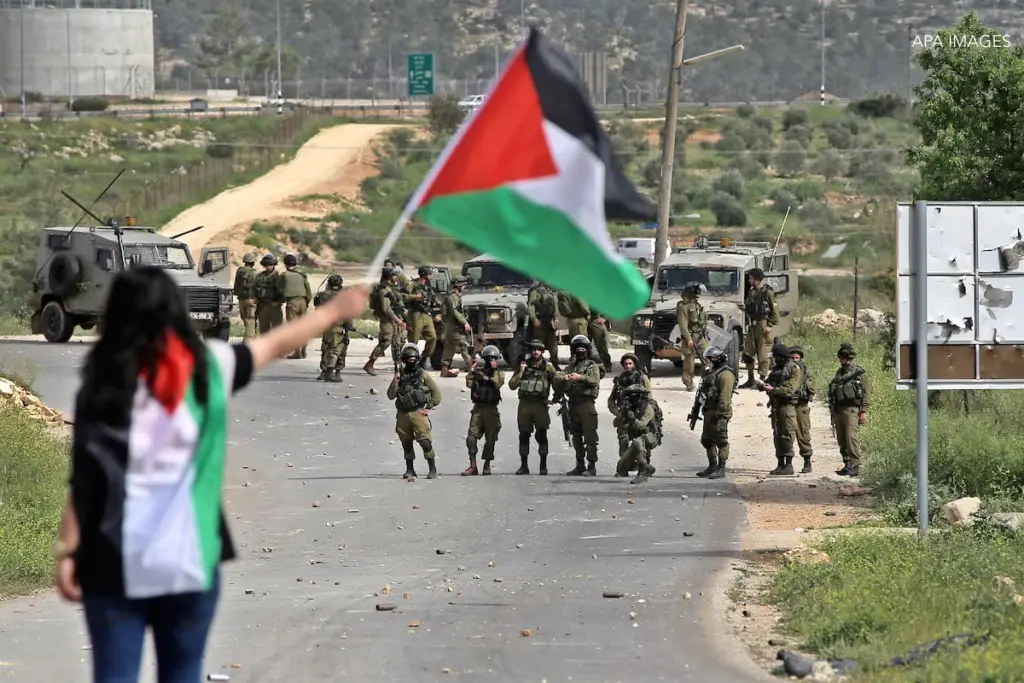
3. Following the October 7 offensive, Israel launched a comprehensive genocidal campaign aimed at the total liquidation of Palestine and the creation of Great Israel, targeting not only Gaza but also systematically attacking the West Bank while invading Lebanon and Syria as well. This horrific genocide unfolded before the eyes of the entire world, actively reinforced by the United States and the overt complicity of European imperialist powers. This campaign of annihilation developed hand-in-hand with a region-wide Zionist offensive. In Lebanon, the historic leadership of Hezbollah was assassinated, and its core cadre structure sustained severe blows. In Syria, the Assad government, which had historical conflicts with the US-Israeli bloc, was finally dismantled through a combination of imperialist siege and proxy jihadist assaults. Iran was designated as the next target for the decisive, final blow. After overthrowing the Iranian regime, the US-Israeli bloc would find itself directly bordering Pakistan, China’s most important ally in the region, and already a weakened state, which would represent a major strategic breakthrough in the encirclement of China. On the surface, the US-Israeli war machine appeared unstoppable. However, the objective reality of the ground shattered the calculations of the imperialist centers. First and foremost, the resistance in Palestine and Lebanon proved that popular mobilization is an unstoppable force even by the most sophisticated war machines, proving that imperialism is not undefeated.
4. The establishment of the so-called ‘Peace Board for the Gaza Strip’—headed directly by Donald Trump—must be analyzed as an institutional attempt to impose a colonial protectorate over Palestinian territory. Under the ideological cloak of ‘stabilization’ and ‘reconstruction,’ this initiative seeks to dismantle Palestinian sovereignty, secure the long-term strategic interests of imperialist powers, and integrate Gaza into a restructured regional order dominated by capital. Simultaneously, Hamas’s recent decision to dissolve its governing committee in favor of a technical administration comprised of regional officials, pursuant to the October 2025 commitments, reflects the objective limits of nationalist resistance strategies when subjected to intense regional pressure. This partial retreat is fundamentally the product of systematic coercion by the Arab bourgeoisie. By leveraging their economic and political integration with Western imperialism, these reactionary regional regimes have actively enforced the isolation of the resistance of the Palestinian people, utilizing administrative restructuring to neutralize anti-imperialist opposition and safeguard their own class interests.
5. Beyond the Middle East, imperialist rivalries are intensifying across North Africa and the Horn of Africa, extending the same geopolitical struggle into new theatres. In Sudan, the defeat of the revolutionary uprising and the absence of an independent working-class leadership opened the way for a devastating civil war, in which rival military factions, backed by competing regional and international powers, have plunged the country into one of the world’s gravest humanitarian catastrophes. Across the Horn of Africa, the growing military presence of NATO and other external powers, particularly around the Red Sea and Somalia, reflects the increasing strategic importance of this region in the competition over maritime routes, military access, and influence stretching from the Eastern Mediterranean to the Indian Ocean. In the Eastern Mediterranean, the deepening military cooperation between Israel and Greece, together with NATO’s growing military presence around Cyprus, reflects the growing strategic importance of the region. Further east, Pakistan’s strategic partnership with China, the expansion of the China–Pakistan Economic Corridor, and the continuing instability in Afghanistan have turned South Asia into another key arena of geopolitical rivalry. These interconnected developments demonstrate that the Middle East is no longer an isolated theatre of conflict, but the strategic hinge connecting the Mediterranean, the Indian Ocean, and the broader confrontation over the future global balance of power.
6. Iran occupies a decisive position in the strategic balance of the Middle East. Beyond its vast energy resources, its geographical position, vital maritime routes, and political influence extending across Palestine, Lebanon, Iraq, Syria, and Yemen have made it the principal imperialist target. Making a historic strategic blunder, US-Israeli imperialism assumed that the Iranian regime would rapidly collapse; however, Iran managed to resist the attack and deal significant blows to its opponents. This has dealt a massive shock to Netanyahu and the Zionist state. While Israel appeared as an unassailable power across the Middle East until yesterday, this image of his has been cracked, and his ability to enforce his choices is being challenged.
The imperialist forces failed to intercept Iran’s missiles, were powerless to stop its drones, and proved utterly incapable of coping with Iran’s capacity to expand the war to a regional scale and disrupt the international capitalist economy. Despite Netanyahu’s desperate efforts to drag the United States into a total war, this has failed to materialize so far – not because of unwillingness on Trump’s part, but because the US military capacity simply did not permit such an escalation. The consequences of this war have fundamentally altered the regional dynamics, establishing a new strategic balance of forces in the Middle East – one that the US-Israeli bloc will never accept and cannot tolerate. The ceasefire, therefore, did not represent a political settlement but only a temporary pause in a conflict whose underlying contradictions remain unresolved.
Furthermore, the broader systemic impacts of the war against Iran must be explicitly underscored. On the economic front, the closure of the Strait of Hormuz—compounded by the imminent risk of the Bab al-Mandab Strait being completely shut down by the Houthis as tensions escalate once again—triggered a sharp surge in global oil prices, exacerbated inflationary pressures, and severely disrupted international supply chains, thereby deepening the structural crisis of global capitalism. Politically, this outcome has dealt a tactical setback to Trump’s broader offensive strategy, which, despite ongoing efforts to regain momentum, has been significantly destabilized. Ultimately, imperialism’s failure in Iran has demonstrated once again that the United States is far from invincible, providing a crucial political boost to the anti-imperialist struggle of the working class and oppressed masses worldwide.
7. Prior to the US-Israeli imperialist aggression, the Iranian masses had unleashed a tremendous popular uprising against this capitalist theocratic regime; yet, due to the acute crisis of revolutionary leadership, this spontaneous rebellion was brutally suppressed. The trajectory of the Iranian opposition is profoundly contradictory. The demonstrations in January had broken out for very deeply felt popular demands against the government and had the participation of wide working class, youth and popular sectors, with collaborationist and pro-imperialist forces centered around the remnants of the monarchist Shah clique also participating and trying to project themselves as leadership of the movement. Fortunately, our comrades who uphold Iran’s independent revolutionary class tradition continue their struggle and the masses that were on the streets in January against the Iranian government refused to do so when the calls to action came from Trump and Netanyahu who were bombing the country and wanted a movement to give a popular image to their failed regime change operation. It is historically indisputable that the working class and oppressed masses of Iran have nothing to gain from these puppets of Western imperialism. This right-wing, reactionary opposition, which goes so far as to normalize the imperialist bombardment of Iran and the slaughter of innocent civilians, represents a direct betrayal of the popular struggle.
The courageous people of Iran are caught between imperialist bombardment and the capitalist clerical regime. Nevertheless, the independent class struggle of Iran’s workers and oppressed remains one of the region’s oldest and most deeply rooted revolutionary potentials. The overthrow of the capitalist Mullah’s regime can only be achieved through the organized, self-emancipatory struggle of Iranian workers, youth, women, and oppressed nationalities. Unfortunately, the extraordinary anti-regime energy within Iran is failing to crystallize into organized, independent class channels—both inside the country and among the millions of exiles abroad. Consequently, the heroic struggles of the Iranian proletariat are continuously subjected to the cynical manipulations of imperialist networks. Similarly, the legitimate struggles of Iran’s oppressed nationalities—including the Kurds, Arabs, Balochis, and Turks—are targeted for co-optation by imperialist forces seeking to lay the groundwork for catastrophic ethnic balkanization. Smashing this counter-revolutionary trap depends entirely on the urgent construction of revolutionary Marxist organizations within Iran. There is no other progressive alternative for the liberation of the Iranian masses.
8. Across the Middle East and Asia—from Afghanistan to Iran, and from Lebanon to Turkey and Iraq—the region is marked by authoritarian theocratic regimes, civil wars, and proxy wars. Yet it is also home to a powerful, deep-rooted grassroots movement fundamentally opposed to Islamist authoritarian despotism. The vanguard of this subterranean rebellion is composed of women and youth, who are spearheading the resistance against state repression. For revolutionaries, the paramount historical task is to root this explosive democratic energy within a distinct, independent class framework. Only by organizing this widespread anger into a programmatic socialist channel can it be transformed into the engine of revolutionary Marxist party-building across the region.
Furthermore, across Pakistan, Egypt, and the entire North African belt, a potent grassroots struggle is fermenting against non-clerical despots and military-bonapartist regimes. The masses in these regions are increasingly revolting against the brutal austerity and political tyranny imposed by “secular” dictatorships that serve as local managers for global capital. It is of paramount historical urgency to synthesize these scattered battlegrounds, alongside the anti-clerical movements of the Middle East, under the singular, uncompromising banner of Revolutionary Marxism. Only an internationalist Marxist vanguard can unite these diverse popular explosions into a coordinated assault against regional capitalism and imperialist domination.
9. While presenting itself as the guarantor of Kurdish security, the United States has repeatedly treated Kurdish people’s national aspirations as a bargaining chip in its regional strategy. From Iraq to Syria, every tactical alliance has ultimately been subordinated to the broader interests of US imperialism. The experience of the Kurdish people has repeatedly demonstrated that imperialism neither defends nor recognizes the right of oppressed nations to self-determination beyond the limits of its own strategic objectives.
Today, this historical pattern of betrayal is unfolding in new forms. While it remains unforgettable how the US abruptly abandoned Kurdish forces in Rojava when it suited Washington’s interests, Ankara continues to hold immense responsibility for spearheading the destruction of historical Kurdish achievements in Rojava. Concurrently, the current «peace process» managed by the Erdoğan regime alongside Abdullah Öcalan in Turkey represents a complete deception. Erdoğan, who continues his deadly assaults against democratic rights domestically, desperately needs to neutralize and freeze the Kurdish opposition. Yet, it is entirely obvious that the regime will give absolutely nothing to the Kurdish people in return.
Imperialism and regional bourgeois regimes recognize neither democratic rights nor the right of nations to self-determination beyond their own strategic goals. This reality has become even more acute in the context of the recent war involving Iran, where US imperialism and Zionism have once again attempted to deploy Kurdish forces as mere ground troops for their own geopolitical designs. However, no liberation can be expected from genocidal Israel or Washington; these forces operate solely on ruthless self-interest and will never be genuine allies to the Kurdish people. Ultimately, just like the liberation of the Palestinian people, the true emancipation and self-determination of the Kurdish people cannot rely on imperialist actors or diplomatic deals with oppressor states. It can only be achieved through the united struggle of the workers, youth, and oppressed masses of all nationalities across the region against imperialism, Zionism, and every form of bourgeois domination. A Socialist Kurdistan will win its rightful place through a unified class offensive within a voluntary Socialist Federation of Middle Eastern Republics.
10. The destruction of Iraq, Libya, and Syria has demonstrated that regime-change operations do not liberate peoples but dismantle societies, deepen sectarian divisions, and subordinate entire countries to imperialist domination. For this reason, every attempt by the United States and its allies to overthrow governments through military aggression, sanctions, occupation, or proxy wars must be rejected without reservations. The defeat of imperialism is indispensable not only for ending the war against Iran and Palestine, but also for halting the broader cycle of imperialist aggression across the region and beyond. Invoking the rhetoric of «freedom,» «democracy,» and «human rights,» imperialism has repeatedly sought to legitimize military intervention while crushing genuine struggles against oppressive bourgeois governments, exploitation, and oppression under the permanent threat of war.
11. The destruction of the Zionist state and the defeat of imperialist domination are indispensable conditions for the establishment of a united, secular, democratic, and socialist Palestine in which Muslims, Jews, Christians, and all other peoples can live together from the river to the sea, on the basis of the right to return of the Palestinian people. The Palestinian issue is key to the whole of Western Asia. A victory for the resistance of the Palestinian people, which we steadfastly support, can bring broader upheavals to the region for the benefit of the people. The defeat and delegitimization of Israel, the blocking of any military or other aid to it, and the struggle against the imperialist plans of the US-NATO and the US-NATO bases constitute key duties for the revolutionary forces in their respective countries.
The scale of international solidarity with the Palestinian people and the mass mobilizations that have filled the streets around the world have shaken the legitimacy of the genocide and of its principal perpetrators: the United States, Israel, and all the forces complicit in these crimes. The powerful opposition these mobilizations have expressed against their own governments has, in many countries, been met with repression, criminalization, and attacks on those who stand in solidarity with Palestine. In the face of these attempts to criminalize the movement, we must continue to defend the Palestinian people’s right to self-determination, their right to self-defence, and their right of return, while standing in solidarity with all those who face repression for supporting these rights.
12. Having historically served as the local collaborators of imperialist domination and the plunder of the region’s immense natural wealth, the national bourgeoisies of the Middle East have relied on authoritarian rule, repression, and the systematic suppression of independent working-class organizations to preserve their power. The continued impoverishment, unemployment, and political disenfranchisement of millions of young workers is not the inevitable fate of the Middle East, but the consequence of a capitalist order sustained by imperialism and its regional allies. The struggle for humane life, democratic rights, national liberation, and lasting peace, therefore, cannot be separated from the struggle to overthrow bourgeois rule. The only progressive alternative for the peoples of the region is the struggle for socialist revolution and the establishment of a Socialist Federation of the Middle East.