Latin America is currently facing a situation characterised by a rise of the right and increased pressure from US imperialism, which forms part of the global offensive being waged by the Trump administration as part of its attempt to halt its decline as a hegemonic imperialist power.
The difficulties Trump has encountered in his ‘economic’ wars (tariffs, blockades, etc.) and diplomatic/military adventures have led him to rethink his reactionary and warmongering plans. One of his main objectives would be to ‘reorganise’ Latin America, integrating it into a common economic, political and military bloc with the US. This echoes what US imperialism did in the early 1940s – before entering the war against Japan and the Axis powers – when it brought almost all Latin American countries into the US-dominated Pan-American alliance.
Those who suggested that Trump was abandoning his plans against China and Europe—and his drive to re-establish US global dominance—in order to settle for dominating his ‘backyard’ were mistaken. This is an offensive aimed at aligning Latin America with the US, securing greater autonomy in the supply of raw materials essential to the US economy and defence (lithium, rare earths, etc.) and blocking the advance of rival powers.
One of the objectives is to prevent China’s advance into the Latin American economy, to the detriment of US monopoly interests. China has carried out a number of major public works projects. One example is the Chancay mega-port in Peru, which is serving to establish a bioceanic route from São Paulo in Brazil – a move that would mitigate the potential impact of a US-imposed blockade on Chinese trade via the Panama Canal. This is driven not only by economic factors but also by military strategy. Milei’s government is stalling already signed agreements for the construction of dams in Patagonia by Chinese companies. The same applies to the mining sector, where competition for lithium, rare earths, copper and other strategic minerals between US, Chinese and Canadian companies is intensifying. China, as it expands, is a major buyer of commodities and requires bulk quantities of grain and meat. Trump can do little in this regard: the oligarchies and the so-called ‘agropower’ defend to the hilt the placement of their soya and agricultural produce on the Chinese market. China exploits this situation to impose the import of its industrial goods. However, the billions of dollars flowing into Latin American economies from this trade are not used to promote industrialisation or to meet their countries’ social needs, but instead go towards paying the interest on usurious debt owed to the IMF and highly speculative financial capital.
This plan was announced in December 2025 in the document ‘National Security Strategy’, which focused on regaining, to an ever-greater extent, control over Latin America. It updated the Monroe Doctrine (1823, ‘The Americas for the Americans’), now called the Donroe Doctrine, to regulate and control Latin America. Less than a month later, on 3 January this year, it invaded Caracas (carrying out bombings and massacring the guard, largely made up of Cuban soldiers) and abducted President Nicolás Maduro and his wife, Cilia Flores, taking them as hostage prisoners to a US jail, accused of being “narco-terrorists”. It thus succeeded in imposing a “regime change”, placing the leadership of the Chavista movement in government as agents of a US protectorate and gaining control over the flow of Venezuelan oil (the world’s largest hydrocarbon reserves). At the same time, he stepped up his offensive against Cuba, reimposing a strict economic blockade – particularly on oil – and cutting off supplies previously sent from Venezuela. He also targeted Colombia, directly threatening the then President Petro (holding out the spectre of Maduro’s kidnapping). Two months later – having already launched his new war with air strikes against Iran on 28 February and buoyed by the initial ‘success’ of having assassinated a large number of members of the Iranian government – he held a plenary session in Florida where, in the presence of a dozen Latin American presidents, he signed the ‘Shield of the Americas’ agreement, which authorises the US military to act as the continent’ n police force in the fight against ‘narco-terrorism’, allowing it to invade any country facing such an accusation.
At the head of this right-wing bloc is the Argentine Milei, alongside Bukele (El Salvador) and others. In the months that followed, right-wing candidates José Antonio Kast in Chile, Keiko Fujimori in Peru and Abelardo De La Espriella in Colombia won their respective presidential elections. Rodrigo Paz was elected president in Bolivia, running against right-wing candidates. However, once he had won the election, he quickly shifted to the right, being co-opted by the continental Trump/Milei bloc.
Limits and causes of the right-wing advance
Right-wing candidates managed to prevail at the polls, supported by Trump – who intervened directly – and sectors of big business, channelling some of the disillusionment and rejection felt by large sections of the population towards the ‘progressive’, centre-left and/or bourgeois nationalist governments which, with empty rhetoric, had been subjecting them to savage austerity measures. Not only did these governments fail to resolve the serious existing economic and social problems, but they significantly exacerbated them, with ‘austerity’ measures devised in collaboration with the IMF. Driven by social despair, there were massive electoral shifts towards right-wing alternatives.
The new right-wing governments have inherited and are deepening social misery, with ever greater and more audacious measures against the working masses. We are facing an economic slowdown across Latin America: almost 35 per cent of the population lives below the poverty line, whilst the richest 10 per cent receive 75 per cent of national income. Latin America is the continent with the greatest social polarisation, which is also reflected in the political sphere. Honduras allocates 25 per cent of its state budget to paying interest on its foreign debt; Ecuador and Argentina are the largest payers of debt interest, bleeding state budgets dry. The usurious financial capital is paid off by cutting social services, education and public healthcare. Attacks on working conditions are intensifying: the annulment of collective bargaining agreements, the precariousness of employment, and the rise of outsourced and undeclared work. The Latin American economy is suffering an ‘industricide’ and is becoming increasingly ‘commoditised’, as it was at the end of the 19th century. Argentina is only ‘growing’ in mining, agro-exports and hydrocarbon exports, with little labour involved (unemployment is rising), exporting raw materials without processing them and shrinking domestic markets to the point of extinction, whilst the social suffering of the masses increases.
However, the right’s electoral victories are also taking place against a backdrop of intense polarisation and are incredibly narrow. In Peru, Keiko Fujimori, daughter of the 1990s dictator, ‘won’ the presidential election – through fraud involving overseas votes, particularly from the US and Argentina, brought in via ‘diplomatic pouches’ – by a margin of some 40,000 votes! (equivalent to 0.3 per cent of the electorate). Keiko Fujimori – following the coup that ousted President Pedro Castillo, accompanied by a brutal crackdown on the anti-coup rebellion that cost the lives of more than 70 Peruvians and left dozens injured and imprisoned as political prisoners – took control of the Peruvian state. Through various appointees, she took over all levels of executive power, including the electoral oversight bodies. In Colombia, too, the right-wing Trump-style candidate De La Espriella ‘won’ (there are allegations of fraud) by a margin of just 250,000 votes out of a total of 25 million votes cast by Colombians.
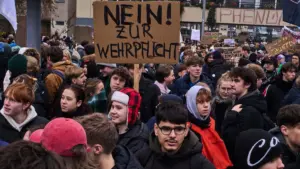
José Kast, who took office as President of Chile on 11 March, has faced – in response to the anti-worker and anti-popular measures he has adopted – a series of demonstrations involving clashes between healthcare workers, students and others, and his popularity has plummeted to 30 per cent in less than four months.
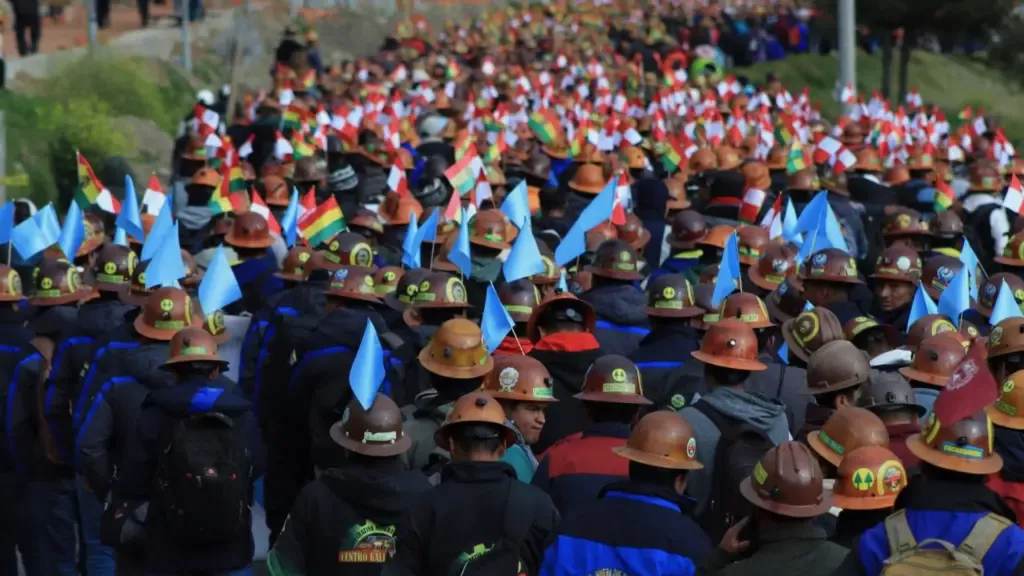
The most significant event in the class struggle was the strike and road blockades carried out mainly by tens of thousands of peasants in Bolivia. This historic event lasted more than 50 days and featured mass marches and clashes with police, military and paramilitary forces. The government of Rodrigo Paz, which had been in office for around five months, was rejected for implementing anti-popular austerity measures (such as a petrol price hike, etc.), and the movement was demanding the president’s resignation. Repression failed to break the struggle of Bolivia’s peasant and working-class masses. It was undermined by the betrayal of the COB leadership, which blocked the strike from escalating and coordination between the roadblock committees and the popular assemblies, and ultimately struck a deal with the government behind the strikers’ backs.
The massive Bolivian mobilisation sent shockwaves across the continent: for Trump and the national bourgeoisies aligned with his reactionary and warmongering agenda, it conjured up the spectre of a new wave of continental rebellions against imperialism and capitalist austerity measures. The ‘Shield of the Americas’ revealed itself to be a ‘Holy Alliance’ against the peoples. Milei was the first to come out in support of Rodrigo Paz’s government, sending a plane carrying ammunition to continue the repression and food to break the roadblock that had besieged La Paz (the capital of Bolivia). His example was followed by Kast of Chile and other Trump-aligned governments. The US threatened to enforce the ‘Shield of the Americas’ more rigorously by sending military aid against the popular uprising.
It is necessary to highlight the cowardly and right-wing role played by Latin American governments and bourgeois nationalist movements. First and foremost, that of Lula in Brazil, who followed Milei’s example by supporting Rodrigo Paz’s government and sending ‘humanitarian’ aid. This former trade unionist, who has renounced the methods of struggle of his youth, acted as a common strike-breaker, in the service of the employers’ government. He stood in the way of the strike and uprising of hundreds of thousands of Quechua and Aymara peasants and workers.
Bourgeois nationalist movements and the reformist center-left such as Kirchnerism/Peronism in Argentina, Chavism in Venezuela or Boric’s Frente Amplio in Chile are the ones whose austerity policies against the people have paved the way for the rise of the right to government and Trump’s attacks. But even whilst in the ‘opposition’, they have not altered the essence of their bourgeois and/or reformist policy of opposing the class struggle, thereby blocking the organisation of workers’ and popular resistance to anti-worker attacks of the bourgeoisie and imperialism. They allow the right-wing to carry out their offensives against the people, demoralising and stifling the mass movements of struggle.
Lula has just declared that he was never on the left. This statement is explicitly directed at Trump and the leadership of the Brazilian national big bourgeoisie and th , on the eve of the upcoming October elections where, as in Colombia, the right-wing/Trumpist alternative of the Bolsonaros is standing. In 2002, faced with the crisis in the Brazilian economy, Lula emphatically declared that, if in government, he would never allow a ‘brasileñazo’ to be even considered. This was in contrast to the ‘argentinazo’ at the end of 2001, when mass popular mobilisations toppled the austerity government, forcing the bourgeoisie to declare an emergency moratorium on foreign debt (which the Kirchnerists later ‘renegotiated’ and paid in full to the IMF in 2005). Now, with his statement, Lula is once again sending signals to big business that he will continue with austerity measures and will not engage in any “demagoguery” in favour of the workers. Lula’s government – which is about to mark four years since taking office – has not reversed either the anti-labour labour reform or the anti-workers’ pension reform imposed by the right-wing coup governments of Temer and Bolsonaro. Lula came to power as part of a popular front with Alckmin – the neoliberal opponent of his previous governments – as vice-president. Lula’s party, the PT, leads the trade union, student and peasant federations, as well as other popular organisations, all of which have been paralysed by their bureaucracies, demobilising the workers’ struggles and resistance.
Popular fronts – fronts of class collaboration – paralyse the working masses in the struggle for their demands. The capitalist class takes advantage of this ‘certainty’ that the bureaucracies will play a demobilising role, in order to push through its regulations and attacks against the people. We must reject these class-collaborationist fronts. We must wage a consistent class struggle for the demands of workers and the people. We must form united fronts of the working class and the left to fight for our rights and put an end to capitalist exploitation by establishing workers’ governments.
Bourgeois nationalist organizations governments and movements, as well as the so-called reformist popular-frontist center-left, have stood by whilst the imperialist attack on Venezuela took place, and are now standing by whilst the US blockade against Cuba continues. Governments that claim to be nationalist or “progressive”, such as Lula’s in Brazil or Sheinbaum’s in Mexico, have bowed to the oil boycott imposed by Trump against Cuba to force it to capitulate, which has led to an energy and humanitarian crisis on the island where the revolution took place in 1959. In Cuba, the bureaucracy that runs the state has been pushing for the full restoration of capitalism. It is negotiating the terms of this restoration with Trump and the CIA, seeking to preserve the privileges and property acquired by bureaucratic sectors. We must mobilise against the threats of a US invasion (there are aircraft carriers stationed in the area) and against the blockade. We support demands made by workers in Brazil and Mexico for their governments to stop trading (in arms and oil) with Israel and to send fuel to Cuba.
We oppose the Cuban government’s reforms towards capitalist restoration that opens up the economy almost entirely to monopolies and finance capital. On the revolutionary island, we stand with those fighting against restoration, for retaking the path to political and social revolution leading to workers’ power.
We must fight against the imperialist blockade, for the withdrawal of their fleets and armies from the Caribbean and Latin America, and to ensure that Brazil and Mexico send hydrocarbons. At the same time, we do not support the Cuban bureaucratic leadership, which is negotiating with Trump the path towards capitalist restoration and has just introduced a wide-ranging package of measures that opens up the economy almost entirely to monopolies and finance capital. On the revolutionary island, we stand with those fighting against restoration, for a new political and social revolution leading to a genuine workers’ and socialist government. And we fight in Latin America and in the whole world to break with the imperialist blockades on the Cuban economy and to mobilize against the threats of military-political interventions.
The Sheinbaum government is capitulating in the face of Trump’s arrogance. It is now renegotiating new terms of the free trade agreement (TMEC) with the US and Canada – a renegotiation imposed by the US president that will make Mexico even more dependent on imperialist monopolies. In Mexico, a growing state of militarisation of national life has been taking hold, under the pretext of protecting public ‘security’. Yet in less than a decade, there have been reports of 200,000 disappearances, whilst the ‘progressive’ government has failed to resolve the problem of hitmen and drug trafficking. ‘Security’ is a rallying cry raised by the right across Latin America (Peru, Chile, etc.) to justify increased police and military controls and the regimentation of the entire population. The ‘safe society’ model is copied from the Yanks, who have 1.8 million people in prison (the largest prison population in the world) and are privatising the prison system with luxury prisons, where jails are filled with Black people and the poor, whilst the rich pay bail that allows them to be released. Repression is on the rise in Latin America, first and foremost against those who are fighting and resisting Fundomonetarist austerity measures (Bolivia, Peru, Chile) and those who oppose the Zionist genocide against the Palestinians and are fighting against imperialist wars. In Mexico, we have just witnessed a 20-day rally involving several thousand teachers, joined by dozens of members of the organisation “Madres Buscadoras” (Mothers Searching for their Missing Children). This was the greatest expression of struggle by the militant teachers of the CNTE in many years; they stood firm despite the provocations of the Scheinbaum government, which prevented them from entering the Zócalo Central Square, opposite the Government House, as they demanded pay rises and the abolition of the private pension scheme (AFORES).
As can be seen, the rise of the right (new governments, etc.) is accompanied by growing social tension and the eruption of some significant peaks of struggle: firstly, that of the indigenous peasant masses in Bolivia, with their 50-day road blockades; the student struggles in Chile; the referendum in Ecuador, where the majority opposed the establishment of US military bases on their territory; and the mobilisations and the 20-day sit-in in the city centre by Mexico’s militant teachers’ movement. Attempting to confront the right by forming popular fronts of national conciliation between the classes is a path to defeat. The workers tie themselves (or rather, the trade union bureaucracies linked to bourgeois nationalism tie them) to the anti-worker bandwagon of the ruling classes. Earlier this year, an Anti-Fascist Forum was held in Porto Alegre which raised the need to form a ‘democratic front’ to defeat the advance of fascism, involving the capitalist governments and parties that have been pushing through austerity measures against the people. The specific aim of this Porto Alegre Anti-Fascist Forum is to replicate the Frente Amplio that governs Brazil, by providing electoral support for Lula against Bolsonaro’s right-wing candidacy. This Popular Front seeks to continue paralysing the mobilisation and struggle of the working and exploited masses.
Regrettably, there are still sections of the left that support the government and this front of class conciliation. This is the case, for example, with the International Socialist League (LIS), which forms part of the PSOL – a party that, whilst claiming to be left-wing, has had several of its ministers join Lula’s cabinet.
They now intend to hold a second session of the Anti-Fascist Forum in Buenos Aires. Having fulfilled their mission in Brazil of supporting Lula’s broad front, they are now seeking to press for the formation of a ‘front of all’ in Argentina, which would subordinate the leftists of the FIT (Left and Workers’ Front) and the militant sectors of the labour movement to Peronist candidates, thereby diverting the energies of the struggle in favour of preparing an election campaign for October 2027. To defeat the right, we must mobilise working people in the struggle for their rights and demands.
It is the workers’ parties that claim to be revolutionary Marxists that must fight for the independence of workers’ organisations from bourgeois nationalism and the pseudo-progressive populist front. Only by fighting against imperialism and capital, and distancing itself from the centre-left and bourgeois nationalism, can the left grow and develop as an alternative in the struggle for workers’ power. In Argentina, the Left and Workers’ Front (FIT) has been waging this struggle for over a decade, now against ‘Mileismo’/Trumpism, whilst distancing itself from and denouncing the bourgeois nationalist ‘opposition’ for its collaboration with the right-wing government against the gains and struggles of the masses. The FIT, which is emerging among sections of the masses as a national political alternative, is also engaged in this internal debate. The objective is not merely to participate in electoral contests(as the revolutionary left must face the ruling classes on all terrains), where some sectors place their focus, but to promote and channel direct action by workers and the exploited, through walkouts, action plans and a general strike to bring down the anti-worker, reactionary and warmongering government. Against any tendency towards sectarism or opportunism it is necessary to promote the constitution of unified rank and file committees of the militants and sympathizers of the FITU and the movements in struggle of the working class, young people and exploited sectors, and call a National Assembly that can base itself on the growing political support for a campaign for the slogan “Out with Milei-General Strike”, that could launch a struggle in Argentina against the ultra-right government and its offensive with the methods of direct action carried out by the workers and peasants of Bolivia in their recent struggle. The current debate inside the FITU has a significant strategic character. Proposing a Constituent Assembly as a solution to the current crisis in Argentina is completely wrong, and even more to propose it as a task for a left government after coming to power. The key now is to organize the class struggle to defeat Milei and contrast the program of social transformations of a workers’ power with the social and economic disaster produced by the subsequent capitalist governments. The debate about what kind of party workers need is also important. A party with an ambiguous program or a broad party of tendencies would be a step backwards compared to the FITU and its program of class independence. The formation of a Revolutionary Workers Party that joins in its ranks the workers vanguards and the organizations that call themselves revolutionaries must be done on the principles of democratic centralism to act as a militant party, one of action and of the strategic struggle for a workers power.
Throughout Latin America, we must lay the foundations for the building of revolutionary workers’ parties, breaking with the ‘tradition’ of bourgeois nationalist parties and the poular-frontist and reformist left and their collaborationist policies. We discard the idea of “broad parties”, made up of “tendencies”, structured around an electoralist policy and which have led to the integration of popular front formations (PSOL in Brazil, NPA in France). This battle must be waged, in particular, within the major historical organisations of the working class – the trade unions and workers’ federations, and the agrarian struggle co-ordinating committees – by expelling the anti-worker bureaucracies, which have increasingly become tools of the employers. Action plans involving strikes nd general strikes, pickets and mass mobilisations.
Bolivia has just shown us the way; we must follow it and go further.
Against racism, for the rights of indigenous peoples, who form the majority across vast swathes of Chile, Peru, Bolivia and Ecuador.
Down with the state of emergency and repressive laws. Freedom for all those imprisoned for fighting.
Repeal of the reactionary labour and pension reforms. In defence of collective bargaining agreements, reclaiming the gains that Milei’s anti-worker legislation has curtailed.
Nationalisation without compensation of foreign trade and the banking sector. Expropriation of the major mining and oil companies and placing them under the control of their workers.
Away with the “Shield of America”. For an alliance of workers and peasants against the governments of capital. For workers’ governments and the Socialist Unity of Latin America.
End the blockade and embargo to Cuba. Independence for Puerto Rico. Malvinas Islands are part of Argentina.
Down with imperialist wars: proletarians and the exploited of the Americas and the world, unite!