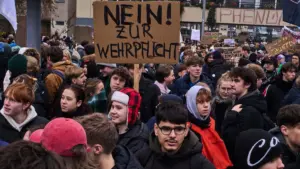
Workers around the world and popular organizations are facing an escalation of repression and political persecution at the hands of their governments. Regimes of various political persuasions – from proto-fascist and conservative to progressive and ‘left-wing’ – are stepping up repression against workers in their own countries, violating the most basic democratic rights. The International Forum against Political Persecution and Repression, held in May 2025 and attended by delegations from 31 countries, concluded that “This escalation of repression is intensifying in the wake of the global economic crisis, which is exacerbating inter-imperialist conflicts and threatens to plunge humanity into the disaster of a new world war”. Policies of social austerity and the rollback of workers’ gains, designed to defend their profits, rely heavily on repression—both to suppress popular uprisings and to create a broader climate of social discipline conducive to policies of exploitation of the working class and the popular majority.
Another key conclusion of the Anti-Repression Forum was that the response of the working class and popular organisations to these attacks cannot be confined to institutional channels, and that they can only be defeated through the mobilisation of the masses and the historical methods of international solidarity
A prime example is that of Polo Obrero in Argentina.
An organisation of unemployed workers, founded by the Partido Obrero 25 years ago with the aim of organising the thousands of workers laid off by the crisis and thrown onto the streets. Known as ‘piqueteros’ for their methods of struggle—roadblocks, blockades and mass demonstrations—they are systematically targeted by police repression under every government in power. The fact that it has conquered tens of thousands of food subsidies, hundreds of soup kitchens and workers’ cooperatives through revolutionary methods sets Polo Obrero apart from other so-called reformist ‘social organisations’, which are predominantly nationalist – Peronist in nature, which adopt a conciliatory stance towards bourgeois governments and the Church, and whose practice is based on cooling down the class struggle in exchange for perks and political posts. It is their combative nature that makes the Polo Obrero and other like-minded groups convenient victims of an ultra-right-wing regime such as Milei’s.
The attack on the Polo Obrero is brutal: the mass closure of soup kitchens, the withdrawal of food aid and, most seriously, the prosecution of some twenty activists on utterly false charges which, if upheld, could result in sentences of up to 15 years’ imprisonment.
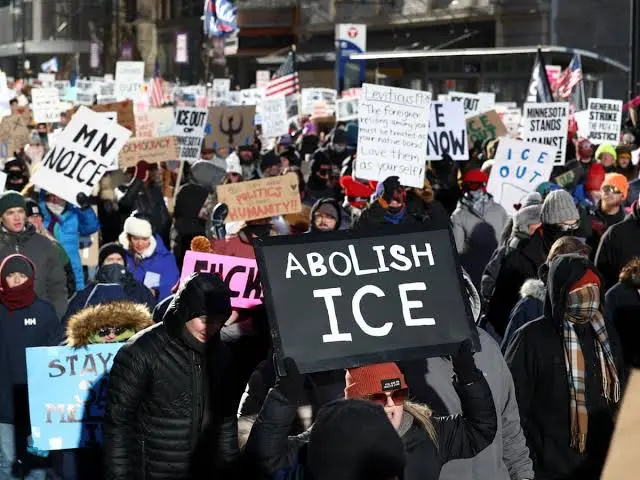
A particularly notable example of the struggle against repression: the mass uprising in the US against Trump’s attack on migrant workers, which culminated in the strike and mass mobilisation in Minneapolis and Saint Paul, US, against the incursion of the federal immigration police – ICE – Donald Trump’s ‘Gestapo’. A force of lumpen elements and thugs, participants in the 2021 storming of the Capitol and responsible for the murder of Renee Good and the abduction and deportation of thousands of migrant workers.
The protests spread to 300 cities, with business shutdowns and student strikes, using direct action to strike a blow against Trump’s policy of militarising society and contributing to the political decline of the millionaire, whose electoral prospects are rapidly deteriorating.
In the UK, amongst the massive demonstrations in support of Palestine, Palestine Action stands out – a direct-action organisation supporting the pro-Palestinian struggle – which was declared illegal and banned by the Labour government and Parliament in July 2025, having been labelled a terrorist organisation. More than 3,300 people were arrested for supporting PA; the main reason for the persecution is that PA organised direct-action campaigns, such as a raid on an air force base to spray-paint graffiti on its premises, or against the Israeli arms manufacturer Elbit Systems. Four PA activists were sentenced to between 5 and 7 years’ imprisonment for this reason. In September 2025, the British police arrested 900 Palestine Action supporters during a protest.
The list of cases of repression against workers around the world is endless and growing, as this is a systemic phenomenon, inherent to the capitalist crisis and inter-imperialist struggle. No capitalist government, of whatever political persuasion, is exempt, insofar as it forms part – amid clashes and contradictions – of the camp of big imperialist capital. In Latin America, the Middle East, Europe and Africa, the repression of the workers’ struggle – whether through legal, police or military means – is the order of the day.
In Latin America: Ecuador: President Noboa is responding with harsh military repression to the indefinite strike by trade unions demanding the reinstatement of a diesel subsidy. Three workers have already been killed. In Peru, the presidential elections – won by a razor-thin margin by the far-right candidate Keiko Fujimori – were held under a state of emergency and militarisation, against a backdrop of three coups d’état orchestrated by a parliamentary oligarchy backed by the armed forces. Between 2022 and 2023, fifty civilians were killed by police and military forces during anti-government protests. The rise of right-wing governments in Latin America goes hand in hand with legislative reforms that increase the penalties for social protest. Bukele in El Salvador, Milei in Argentina and Katz in Chile are directing their police forces against protests by workers, pensioners and students, under the complicit gaze of the bourgeois opposition and the trade union bureaucracies. The recently elected far-right leaders, Keiko Fujimori in Peru and Abelardo De la Spriella in Colombia, have issued fascist-style proclamations that are strongly anti-worker and laden with threats of repression. In Bolivia, the most significant strike and mass mobilisation of this period was suppressed by Rodrigo Paz’s government using the police, the army and hired killers, with the complicity of the trade union confederation and the material support of the governments of Trump, Milei in Argentina and Katz in Chile. Lula of Brazil supported Paz with ‘humanitarian aid’. A further 14 countries provided diplomatic support as part of the launch of the ‘Shield of the Americas’, a veritable league for repression across the continent
In Europe, the governments of the UK, Germany and Italy are carrying out systematic political repression of social protest, particularly against movements opposing anti-immigrant repression, war and militarisation, and the genocide of the Palestinian people. Of particular note is the struggle in Italy against Claudia Meloni’s proto-fascist regime, which is anti-immigrant and is dismantling workers’ living conditions.
In the Spanish State, the government of Pedro Sánchez, despite its anti-fascist rhetoric and condemnation of the genocide in Gaza, has repressed protests in solidarity with the Palestinian people, prosecuting activists who disrupted the Vuelta a España cycling race or protested against the presence of an Israeli basketball team in Valencia. We have also witnessed numerous cases of persecution and criminalization for protesting against the far right, such as the seven in Somosaguas, the six in Zaragoza, and the young people arrested in Navarre, or for exercising the right to freedom of expression, as has happened with Pablo Hassel, who has been imprisoned for five years.
In the Middle East, the regimes of the Arab oligarchies are no exception when it comes to repression. To cite just a few examples, in Iran, social protest is savagely suppressed by the Ayatollahs’ regime. The repression of the social mobilisations in December 2025 and January 2026 amounted to a veritable massacre of the civilian population. The number of people executed by the Revolutionary Guard—figures concealed by the regime—is believed to run into the thousands. Whilst Iran rejects the murderous imperialist military onslaught by the US and Israel, it maintains a domestic dictatorship that silences all opposition to the Islamic regime. In Turkey, Erdogan’s government has relentlessly stepped up its repression. Through strict control of dissent, it imprisons opponents, bans peaceful demonstrations and violently suppresses public protests.
Repression in Africa, generally carried out by nationalist regimes, is the least well-known but the deadliest. To cite just one example among dozens of cases, in Tanzania, protests against fraud in the recent elections – in which Samia Suluhu Hassan was re-elected – were met with a military crackdown, leaving 150 dead, a figure the opposition claims is as high as 700. To take another example, in Kenya, William Ruto’s government cracked down—with arrests, torture and enforced disappearances—on a mass mobilisation demanding justice for the victims of another protest a year ago, which had been against a package of price hikes on essential goods that Ruto had met with bloody repression.
The social and political repression of popular protests and their vanguard is a global constant, inherent to the capitalist crisis and the trend towards militarisation and war. It does not depend on the whims of those in power but on the course of the class struggle. In this sense, we must anticipate an increase in such repression as the crisis deepens and becomes more widespread. The struggle against repression, for freedom and for people’s rights is common to workers throughout the world and forms part of international solidarity. It is therefore of the utmost interest to revolutionaries and socialists.
Unity and organisation against repression and the criminalisation of protest – Freedom for all political prisoners and those imprisoned for fighting – Down with the repression by capitalist governments against socialist organisations and mass movements – against militarisation and war – freedom for all Palestinian prisoners and the right of return – defence of the right to strike and all trade union and social gains – an end to all persecution of migrant workers – for the international unity of struggles against repression.