By Alex Callinicos
This text was presented as an accompanying piece to the article “What are the lessons of Zohran Mamdani’s victory for Your Party?” by Charlie Kimber, also published in the International Debates webpage.
Developments in the past few months have turned the radical left in Britain upside down. They spring ultimately from the accelerating decomposition of the two-party system that has steered the capitalist state in Britain for two centuries. The general election in July 2024 swept away the corrupt and incompetent Conservative (or Tory) Party government and gave the Labour Party under Keir Starmer a large majority of parliamentary seats.
But Starmer’s ‘landslide’ was a mirage. Labour won on a historically low share of the popular vote – 33.7% on a turnout of 59.7%. A combination of the Conservative collapse and the dysfunctional working of the first-past-the-post electoral system delivered 411 out of 650 seats in the House of Commons to Labour. The reality is that declining support of the neoliberal centre dominated by Conservatives and Labour is giving rise to a multiparty system. Significant numbers of votes and seats went to smaller parties – Liberal Democrats, Scottish and Welsh nationalists, Greens, and, on the far right, Reform UK.
Most significantly a breach opened up on Labour’s left. Since October 2023 a huge Palestine solidarity movement has developed in Britain. Fury at Starmer’s complicity in the Gaza genocide, especially in working-class areas with high concentrations of Muslims, meant that this movement broke into the election. Jeremy Corbyn, ex-Labour leader driven out of the party by Starmer, and four other pro-Palestine ‘independents’ were elected to Parliament.
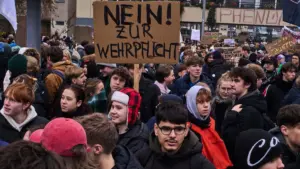
This was one of several indications of a revival of the British left after the defeat of the movement around Corbyn’s leadership of the Labour Party. The inflationary upsurge after the COVID-19 pandemic provoked a significant strike wave in 2022- 3. While the trade-union bureaucracy was strong enough to prevent these struggles from generalizing, the Starmer government has been careful to make a few concessions to organized workers. And the confidence from the massive Palestine marches infused the mass demonstrations that overwhelmed far-right attempts to mount anti-refugee pogroms in August 2024.
The breach to the left of Labour widened in the year following the general election. The Starmer government’s inept attempts to appease the bond markets through successive restrictions on working-class access to welfare caused Labour’s standing in the opinion polls to collapse. The main beneficiary was Reform – a sign of the decay of the two-party system. Led by Nigel Farage, a clever far-right demagogue, Reform has pushed both Labour and Tories into increasingly vicious attacks on migrants and refugees. Predictably, these measures have simply fed the rise of Reform by legitimising anti-migrant racism. Polls now predict it would win a general election.
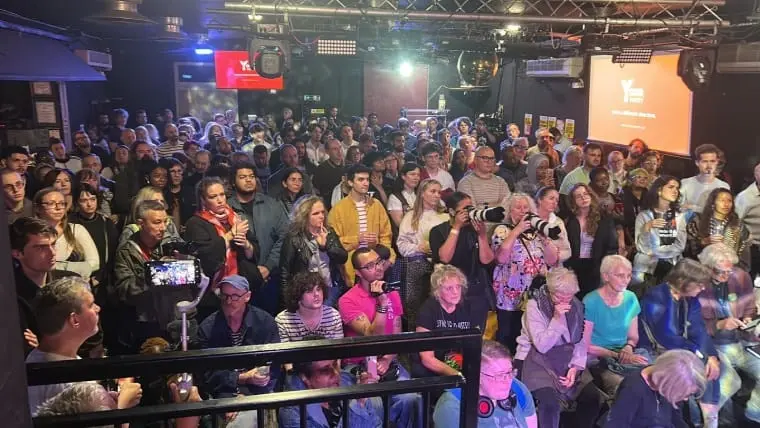
This makes the development of a radical left-wing alternative to Labour very urgent. Corbyn, a hugely popular figure, was well-placed to launch it. But he moved towards this goal slowly and reluctantly. His hand was forced by Zarah Sultana, a young Labour MP suspended from the parliamentary party for voting against austerity measures. In July 2025, supported by a group of respected activists, she resigned from the Labour Party and announced that she and Corbyn would be joint leaders of a new left party. After Corbyn grudgingly agreed to establish a website for what was provisionally called ‘Your Party’, an astonishing 800,000+ people signed up as interested – far in excess of the membership of the main bourgeois parties combined.
But it’s important to understand that the development of YP (as the new party is now known) marks a break with the Labour Party, not with Labourism – the entire tradition of reformist parliamentary ‘socialism’. Corbyn, a protégé of the left Labour leader Tony Benn, is deeply rooted in this tradition and only broke with the Labour Party in response to Starmer driving him out. Sultana represents a more militant version of left reformism, but left reformism it remains.
This of course raises the sorry history of the predominantly reformist ‘new left’ parties that emerged in Europe in the in past 25 years ago – the Bloco de Esquerda in Portugal, Rifondazione Comunista in Italy, the Linkspartei in Germany, Syriza in Greece, La France insoumise (LFI), Respect and the Scottish Socialist Party in Britain (and also outside Europe, PSOL in Brazil). Lifted up by mass opposition to neoliberalism and war, they largely betrayed the hopes concentrated in them, most spectacularly in the case of Syriza. In some other cases they propped up neoliberal centre governments, in others still they capitulated to Zionism. Some, like the Respect and the SSP, disintegrated as a result of electoral failure and internal conflicts. Common to all these outcomes was the logic of electoralism, and the pressure that prioritizing winning votes puts to water down policies and compromise with forces further to the right.
The risk for revolutionaries who participate in these formations is that they capitulate to these pressures. But the experience in Europe of revolutionaries standing on their own electorally has also been quite negative in recent decades. The electoral successes the Ligue Communiste Revolutionnaire in France experienced in the 2002 and 2007 presidential elections encouraged them to launch a broader and politically looser formation, the Nouveau Parti Anticapitaliste, only to be outmanoeuvred and marginalized by the left reformist leader Jean-Pierre Mélenchon.
The only development in Europe comparable to the experience of the Workers Left Front – Unity (FIT-U) in Argentina is People before Profit in Ireland, a coalition led by revolutionaries that has made important electoral inroads. It was active in the campaign that led to a landslide victory by an anti-war and pro-Palestine candidate, Catherine Connolly, in the recent Irish presidential election.
The Socialist Workers Party is very conscious of these largely negative experiences (see this article by Joseph Choonara https://isj.org.uk/revolutionaries-and-elections/). Our participation in Respect and the SSP proved ultimately quite costly. What we went through confirmed the importance of never compromising on the centrality of maintaining our independent revolutionary organization and programme.
Nevertheless, the tradition of revolutionary Marxism is never to abstain from mass movements, criticizing their faults from the sidelines. On the contrary, revolutionaries must throw themselves into these movements and demonstrate the superiority of their politics through the concrete leadership they offer in practice. Real revolutionaries aren’t commentators but seek to intervene in struggles and shape them. As Trotsky put it, ‘The fundamental Bolshevist prejudice consists precisely in the idea that one can only learn to ride when one is sitting firmly on a horse.’
It is impossible to abstain from a political project that raises the hopes among hundreds of thousands of a progressive break to the left from Labour. But this requires not simply swimming with the stream but finding concrete ways of contesting reformism. We don’t think it’s enough to call on YP to adopt a revolutionary programme. Given that the enthusiasm for YP is driven by fear of Reform and disappointment with Labour for failing to live up to what was traditionally expected of it, this kind of call has limited resonances. But Lenin liked to quote Hegel’s saying: ‘The truth is concrete.’ We seek to find the specific issues in which the contest between reform and revolution is found in concentrated form.
So we have focused on giving priority to struggle over elections. More specifically, we oppose the idea that YP should focus on a narrow set of ‘bread and butter’ issues. Of course, resisting the economic offensive against the working class mounted by capital and the Starmer government is essential in building a left alternative that can challenge Reform. But, as the accompanying article makes clear, this needs to be combined with fighting racism and fascism, supporting the rights of the oppressed, continuing to build solidarity with Palestine and to combat imperialism more broadly.
We sum this up by insisting that YP must be an insurgent, anti-capitalist, and democratic party. Emphasis on inner-party democracy is not the least important issue. Immediately the weight of left reformism is expressed the struggle between the Corbyn and Sultana factions at the top. Corbyn relies heavily on individuals drawn from his staff when he was leader of the Labour Party in 2015-20 with a background in the trade-union bureaucracy. They have pushed a top-down structure in which, replicating the traditional Labour Party, ultimate power is in the hands of the Independent Alliance Group of MPs. Since these MPs, aside from Corbyn and Sultana themselves, are based on socially conservative elements of the Muslim community, the effect is to pull to the right.
Thanks in part to tactical mistakes made by Sultana’s side, the Corbyn faction has been able to seize control and marginalize her in the process of actually turning YP into a functioning organization. Delegates to the founding conference in Liverpool at the end of November will be chosen by ‘sortition’ – ie by lot – as a demographically representative sample of the membership. Branches will not be established till the spring. The process for deciding on the party constitution and programme is extremely opaque. Members of far-left groups are banned from joining YP. All in all, YP’s constituent process is highly reminiscent of the ‘horizontalism’ championed by autonomists, which, supposedly ultra-democratic, all too often allows decisions actually to be made by an unaccountable clique (see this article by Tomáš Tengely-Evans https://socialistworker.co.uk/news/exclusive-what-your-party-insiders-are-saying/).
Sultana represents a much more militant version of left reformism. She has clashed with Corbyn for her criticisms of the compromises he made with his Zionist opponents when Labour leader and supports a one-state solution in Palestine. She has championed trans rights, a litmus test for the contemporary radical left. When Sultana speaks at rallies she energizes and inspires large young audiences. She has now put forward an excellent set of proposals for a genuinely democratic YP (https://x.com/zarahsultana/status/1987225710956609629). While not minimizing the political differences, she and her supporters are valuable allies in many contexts, not only that of YP.
Nevertheless, the divisions at the top and the slow and opaque character of the YP constituent process have had a demoralizing and disorienting effect. Corbyn announced with great fanfare at the beginning of November than YP has 50,000 members. This makes it the biggest party to the left of Labour since the Communist Party at the end of the Second World War. Nevertheless, it is a small fraction of the 800,000+ who signed up to the YP website in July and August. Symptomatically it is the Greens, under a new radical left leader Zack Polanski, who are soaking up the aspirations for a new left alternative to Labour. In a recent poll the Greens are running ahead of Labour.
The future of YP still remains open. Our supporters are participating in the assemblies preparing for the conference. They are pushing for our vision of ‘a fighting and democratic Your Party’. They are also active in the local groups that are embryonic YP branches. We are encouraging our supporters to stand as YP candidates in the very important municipal elections next May – one of the problems of the slow-moving process imposed from the top is that it makes it hard for YP to mount a strong campaign against both Labour and Reform.
But we don’t conceal our revolutionary politics. On the contrary (as the accompanying article shows), we are contesting those who want to breathe new life into social democracy. And we are seeking to win new forces to the SWP itself. In this way we can become stronger and more effective in our efforts to shape the emerging new left in Britain.
9 November 2025